The first two days of a claim set its course. The policy is checked or not, the duplicate is caught or not, the right person gets it or not, and the insured hears from a human being or does not. Every one of those either happens in the first 48 hours or costs more later.
What has to happen, in order
phone, portal, email,
broker, ACORD form"] --> B["Is it complete
enough to work?"] B --> C["Which policy, as of
the loss date?"] C --> D["Is it a duplicate?"] D --> E["Who handles it?"] E --> F["Acknowledge
inside the clock"] F --> G["First contact
with the insured"]
None of these steps is difficult. Each is easy to skip under volume, and each has a cost when skipped: a claim handled on the wrong policy term, a second claim opened for the same loss, a file sitting with the wrong team for a week, a statutory acknowledgement missed.
The four questions intake must answer
Complete enough to work?
A notice rarely arrives complete. The question is not whether everything is there, but whether enough is there to start, and exactly what to ask for. A vague “please send more information” letter costs a round trip; a specific list does not.
Which policy?
The policy that matters is the one in force on the loss date. Policies renew, endorsements change, deductibles move. A claims system that shows “the policy” usually shows the current one, which is wrong for any loss before the last renewal.
Is it a duplicate?
The same loss reported by the insured, the broker and a claimant's attorney can become three notices. Catching that at intake is cheap. Catching it after two adjusters have set two reserves is not.
Who handles it?
Line, severity and complexity decide. A workers' comp claim belongs with the comp team; an injury or a suit makes it high severity; a fatality makes it critical and puts it with senior adjusters. These are rules, and they should be written down where people can read them.
How InsightCW does the first 48 hours
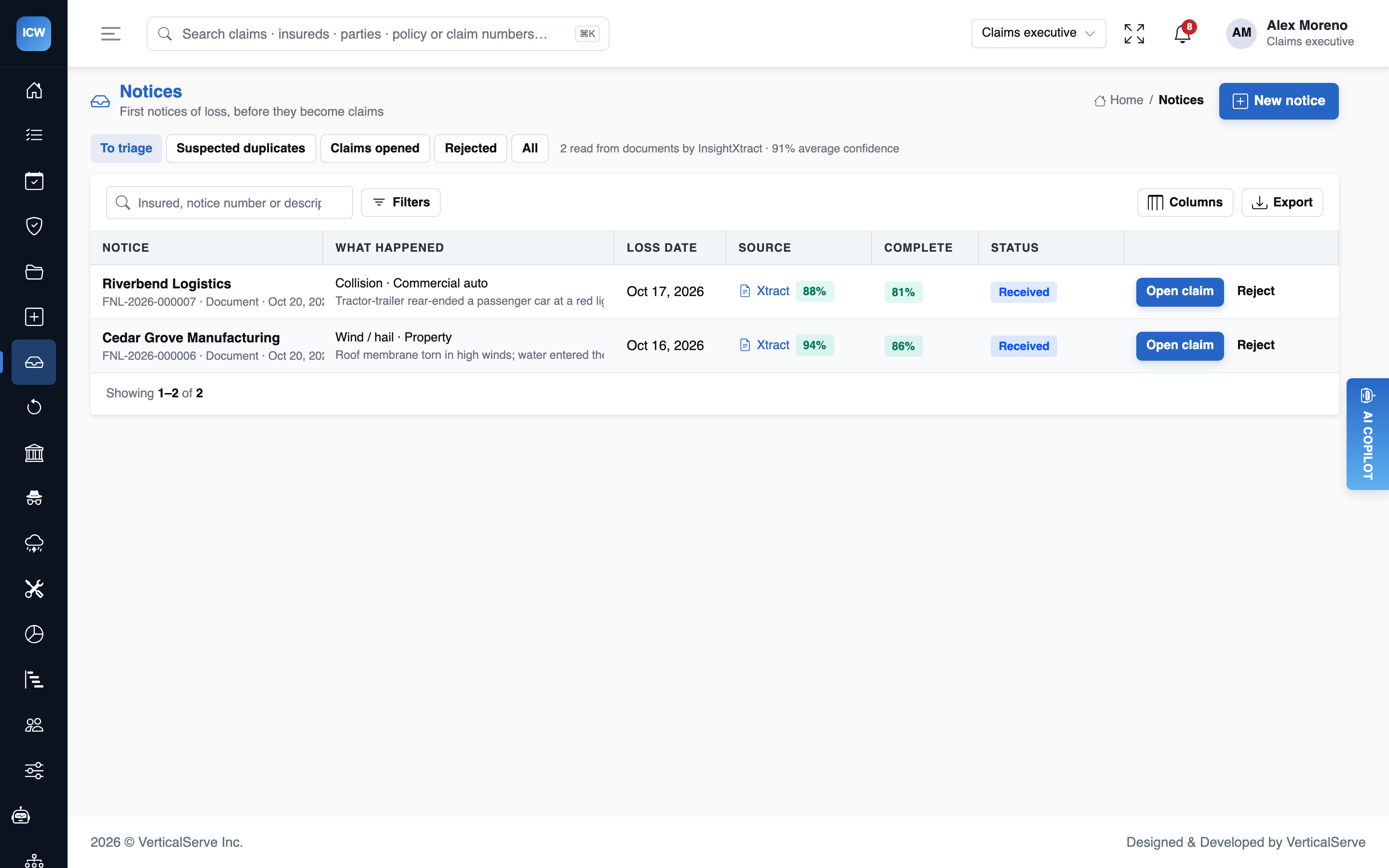
By form, by API, or read from a document by InsightXtract with a citation and a confidence on each field. The acknowledgement clock (24 hours) starts.
A signed, read-only lookup returns the policy as it stood on the loss date; CW keeps the answer dated.
Another notice on the same policy within three days is flagged before anything else happens.
Conversion is a person's step. It opens the claim, runs the severity, assignment, clock and diary rules, writes the first decision-record run and starts the agents.
Completeness, documents and their extraction confidence, the duplicate and the policy term — and a specific information request drafted for the adjuster.
ASSIGN_WC sends comp to the Workers Comp team; ASSIGN_CRITICAL sends critical and high severity to senior adjusters. A three-day first-contact diary opens on every new claim.
The acknowledgement letter is drafted by the correspondence agent; the adjuster sends it inside the clock.
The first-contact clock (48 hours) is met with the file already read: policy, position, reserve basis and what is missing.
What the first 48 hours do not need
They do not need a model deciding coverage before anyone has spoken to the insured. In InsightCW the intake and coverage agents prepare; the adjuster confirms. Speed comes from the lookups and drafts being done, not from the decisions being taken away.
The late-notice use case shows what the policy lookup is worth when the policy has renewed since the loss, and the intake post covers notices read from documents.