Ask an adjuster what they did yesterday and you will not hear “I made decisions about claims.” You will hear about phone calls, emails, diary entries that came due, a reserve review that took an hour because the file was a mess, and a supervisor asking for a status on a claim they had not looked at in three weeks.
This post is about that day: what it holds, where the minutes go, and why the claims that most need judgement get whatever is left over. It is the ground the rest of this blog stands on.
The shape of a desk
An adjuster's open inventory is measured in files, often more than a hundred on a busy property or auto desk, fewer on complex lines. Each file has its own clocks, its own counterparties and its own next step. Very few of those next steps are hard. Most are lookups, follow-ups and letters. The difficulty is that there are so many, and that they arrive in no particular order.
The split above is illustrative, not a survey — but ask any claims leader whether the last slice is too small and the answer is the same. Judgement is squeezed between everything else.
Three ways the day goes wrong
The loudest file wins
The claimant who calls three times a day gets attention. The file that quietly passes a statutory clock does not, until a complaint arrives. Without a ranked list of what is due, urgency is set by whoever is most persistent.
Context switching is the real cost
Every file picked up has to be re-read: what happened, what we said, what we are waiting for, what the reserve rests on. When the answers are spread across a claims system, an email inbox, a document store and a spreadsheet, re-reading a file is ten minutes before any work starts. Across thirty touches a day, that is the day.
Reserve reviews become rubber stamps
A reserve review should ask whether the number still rests on the evidence. When the evidence is scattered and the review is one of forty, it becomes a glance at the number and a date stamp. That is how stair-stepping starts.
What would actually help
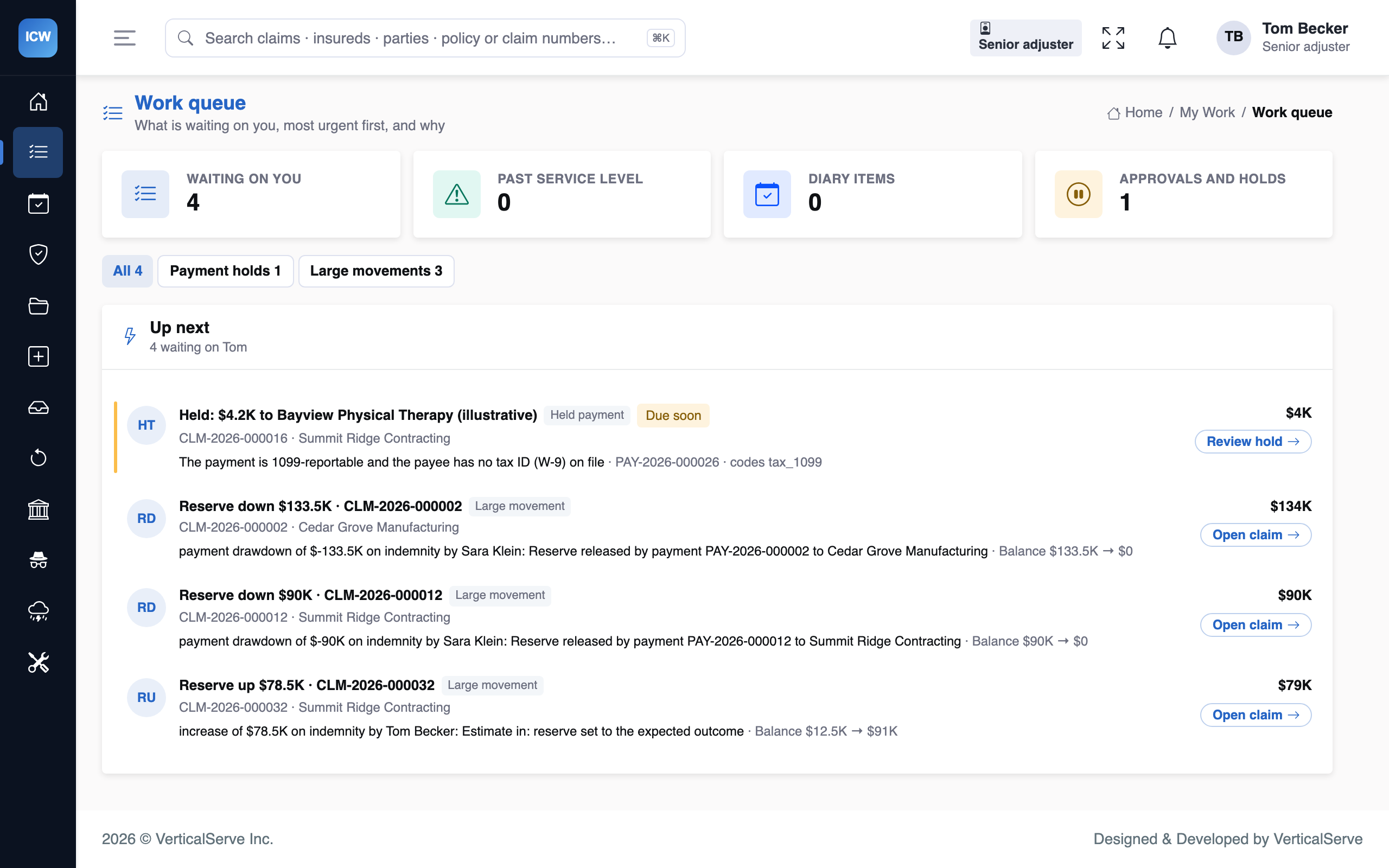
- One list of what needs me, ranked. Past-due clocks first, then money at stake, then age — with the reason each item is on the list.
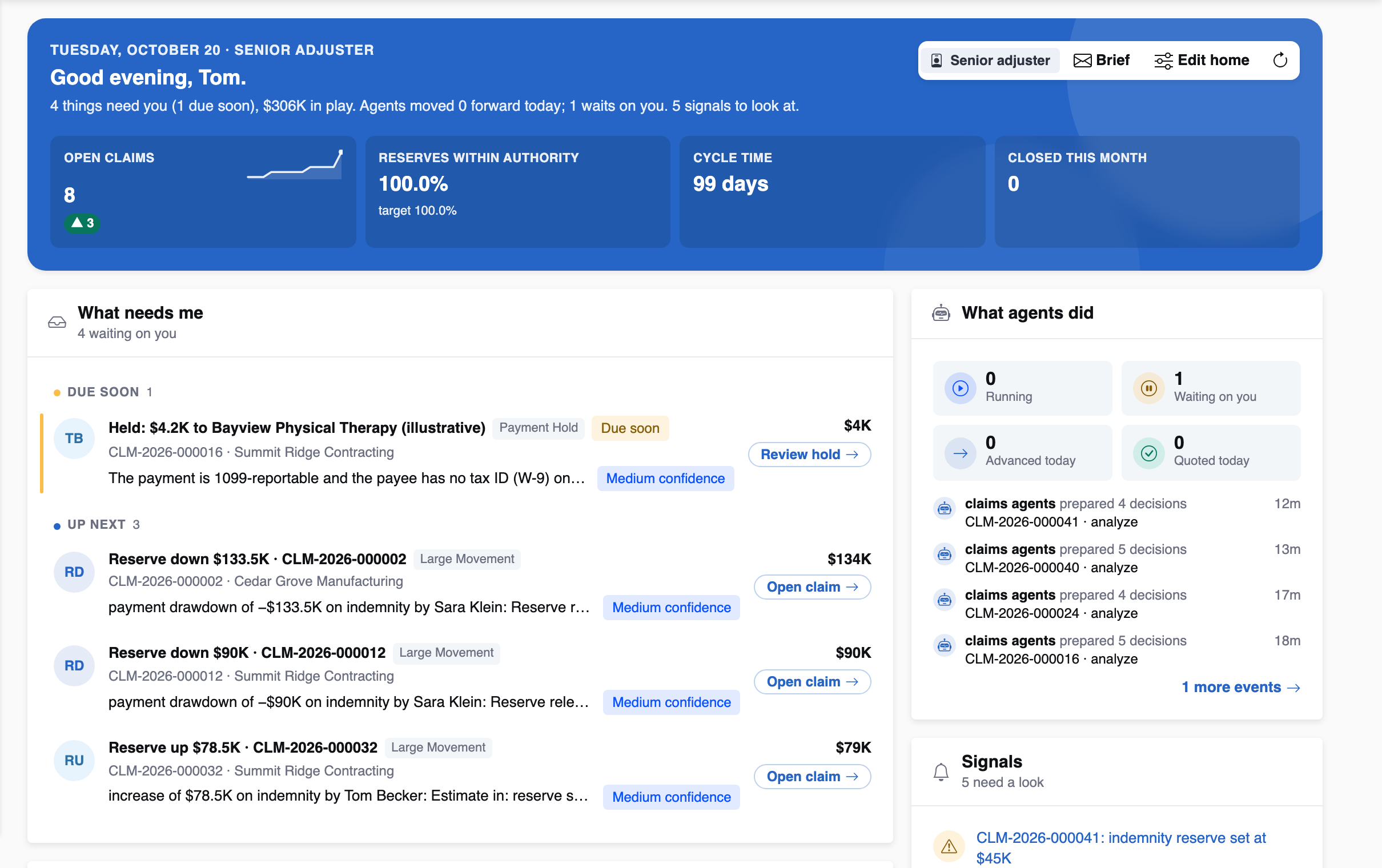
- One page per claim that says what to do next. Not ten tabs; the facts, the position, the reserve, the money and the work, with the next step stated.
- The lookups done before I open the file. The policy as it stood, what is missing, what the rules say, what similar claims did.
- Drafts, not blank pages. The information request, the status letter and the approval brief, drafted from the file for me to edit.
- Nothing done behind my back. Help that prepares work for me, with my name on the decision.
That list is, nearly item for item, how InsightCW is built. The work queue is one ranked list with a reason per row. The Claim Workspace is one page per claim. The agents do the lookups and the drafts, cite what they used, and prepare decisions for a person — out of the box, none of them acts on its own.
What this blog covers next
The rest of the ground truth series looks at the first 48 hours of a claim, reserve stair-stepping, where leakage hides, the statutory clocks and why claims systems stall at being a record. Then How InsightCW works describes the workspace and the agents, and the use-case series follows eleven claims from notice to close.